 Bolivia · City guide
Living in La Paz, Bolivia: a guide for newcomers
What living in La Paz is really like: the altitude, costs, weather, safety, neighbourhoods and day-to-day practicalities.
Source-checked59 sourcesChecked 13 Nov 2026Residents' reports labelledHow we check ContributorJohn Robinson
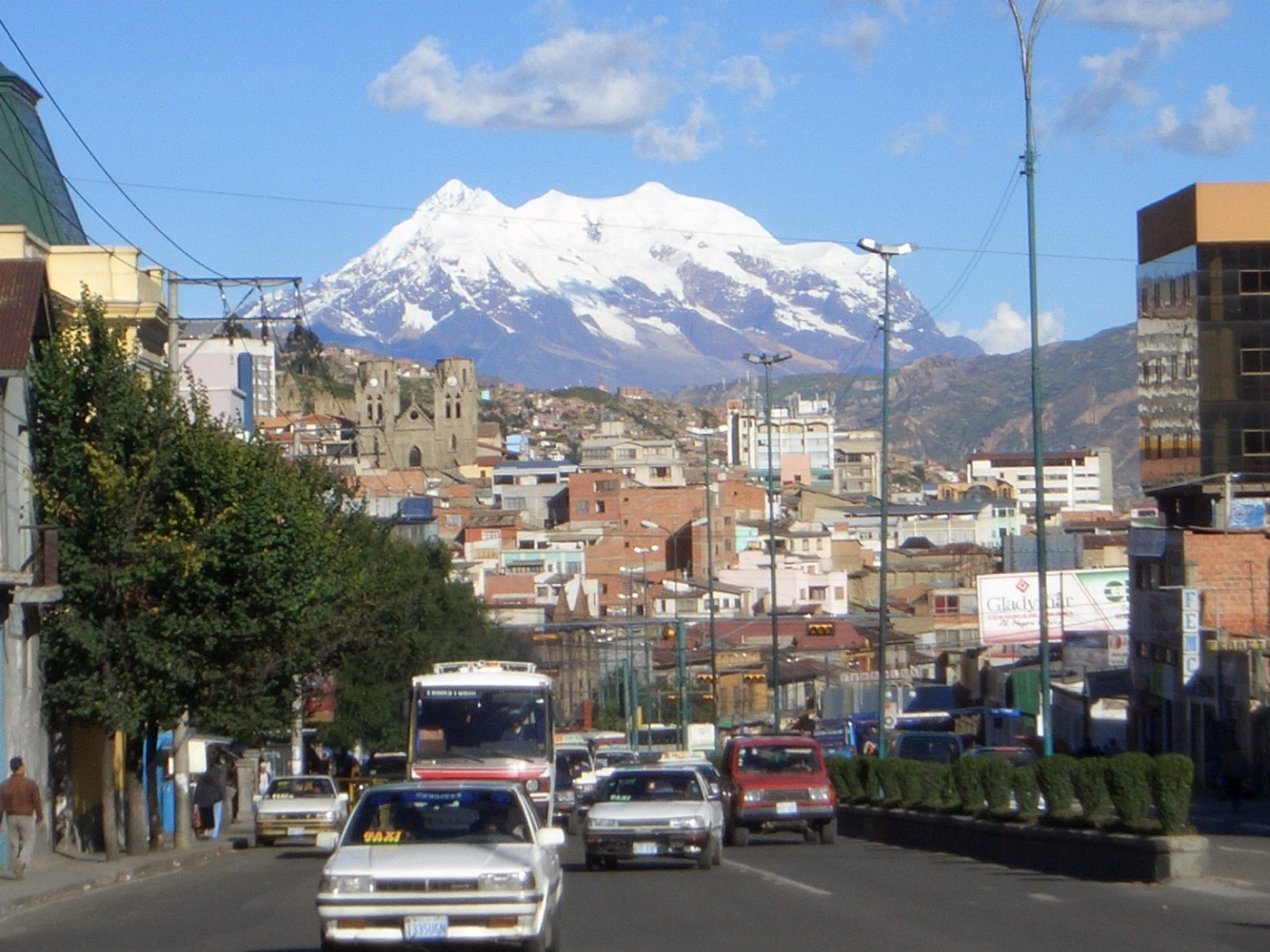
Fewer more
La Paz in brief
- Altitude
- About 11,950 ftDenverLa PazAirport
- Population
- About 756,000
- Currency
- $1 = 11.7 bolivianos$100 = Bs 1,167
- Rent, 1 bedroom
- $290–390 a month
- Weather
- Days 63–68 °F, nights 37–45 °FNightsDays
- US travel advisory
- Level 2: increased caution
- Home internet
- About 77 MbpsTypical 77
- Airport
- LPB, about 7.5 miles out
- Time zone
- Same as New York in summerNew York +1 hChicago +2 hDenver +3 hLos Angeles +4 h
Best for
- Mountain lovers: a big, walkable city with peaks on the doorstep, if you handle the altitude.
- Remote workers on a budget: cafés and coworking within walking distance in Sopocachi.
- Families: Zona Sur is lower and milder, near international schools and private clinics.
Think twice if
- You have a heart or lung condition: altitude makes it worse, so talk to your doctor first.
- You need complex care nearby: residents have major procedures elsewhere.
- Steep streets are hard for you: residents say the hills limit getting around.
- Disruption would derail you: protests, roadblocks and fuel or food shortages happen.
Where to live
Click a neighbourhood on the map, or one below, for rents, altitude, safety notes and what residents say. Turn on what matters to you above the map; “Shade neighbourhoods” colours each area by how many of those places it has.
Popularity with foreigners who move here, from residents' reports. 5 stars: named most often; 2: no expat accounts found.
Things to do
Includes residents' reports
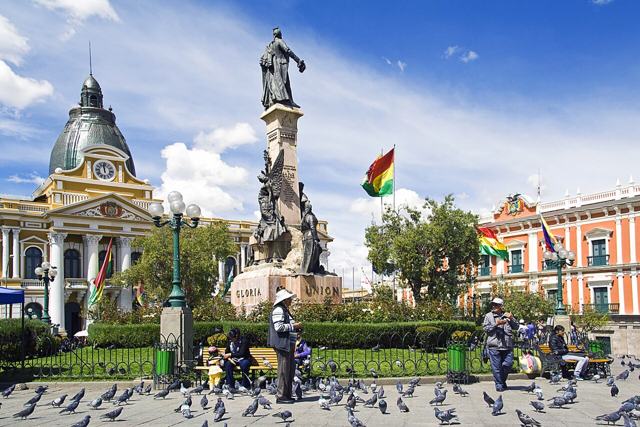
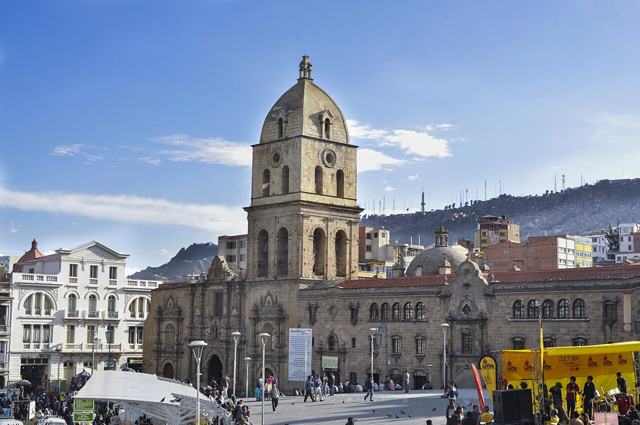
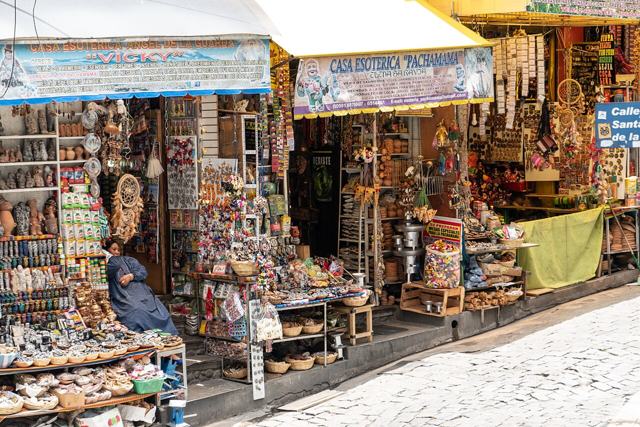
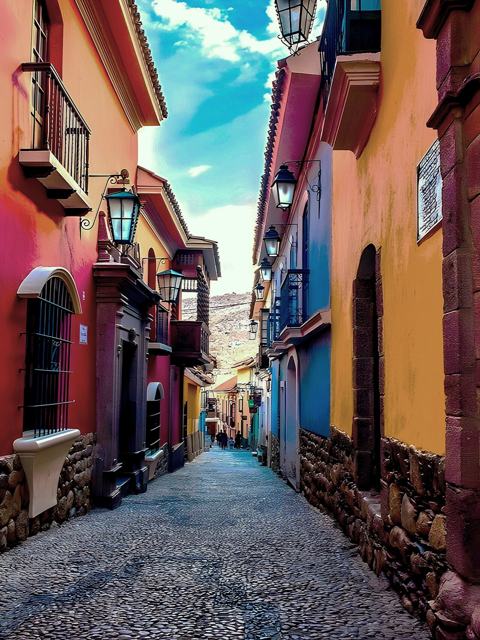
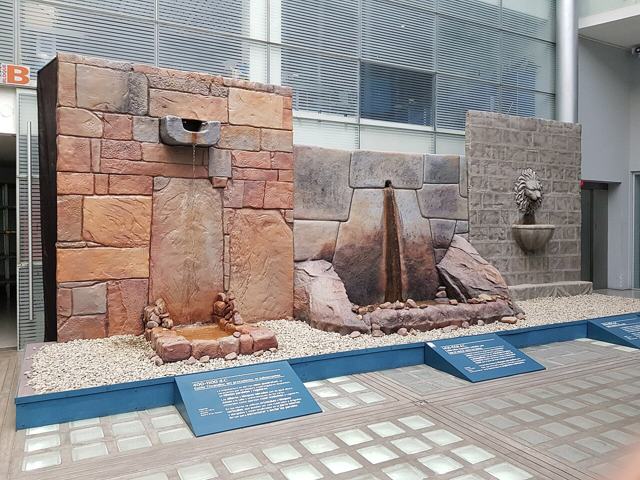
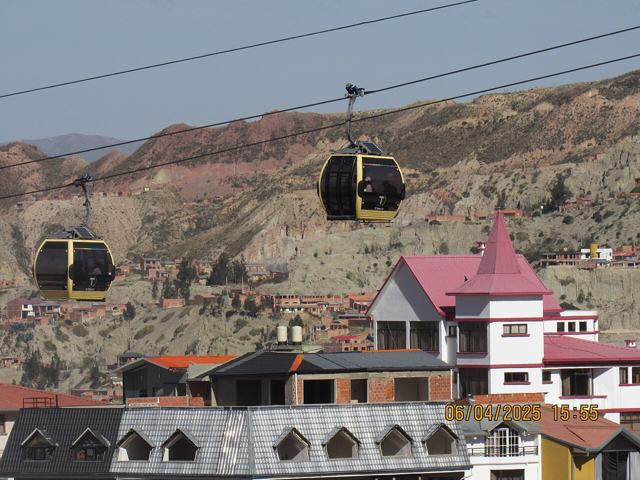
More to see
- Museo de la Coca: small museum on the coca leaf; entry Bs 18.
- Cable car to El Alto: the Red Line (Bs 3) up to the huge 16 de Julio street market, Thursdays and Sundays. Leave valuables behind.
- Mirador Killi Killi: free viewpoint, often called the best view of the city.
- Cementerio General: a vast cemetery of decorated wall niches. Express kidnappings have been reported nearby, so go by day and by radio taxi.
- Muela del Diablo: a tooth-shaped rock peak on the city's southern edge, reached on foot.
Sources (12)
- Wikivoyage, La Paz (community travel guide; listings have mixed edit dates) 2026-11-13
- OpenStreetMap Nominatim geocoding (coordinates used for straight-line distances). © OpenStreetMap contributors, ODbL 2026-11-13
- Cadena 3 (EFE), teleférico supera los 640 millones de usuarios: fare Bs 3 2025-09-02
- UK FCDO Bolivia travel advice, Safety and security (page updated 2026-09-22; still current 2026-11-12) 2026-09-22
- OSRM routing on OpenStreetMap data (project-osrm.org demo server): driving distance and free-flow time, no traffic 2026-11-13
- Wikivoyage, Chacaltaya 2026-11-13
- Wikivoyage, Tiwanaku 2026-11-13
- Wikivoyage, Bolivia (Talk section) 2026-11-13
- Wikivoyage, Copacabana (Bolivia): Get in from La Paz 2026-11-13
- Wikivoyage, Isla del Sol 2026-11-13
- Wikivoyage, Yungas Road 2026-11-13
- Wikivoyage, Coroico: Get in / Go next 2026-11-13
Day trips
Includes residents' reports
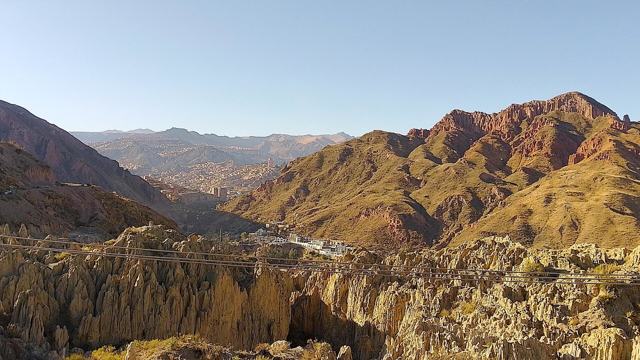
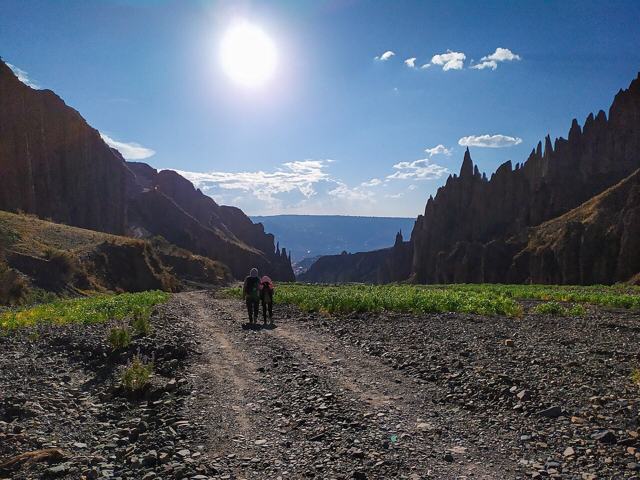
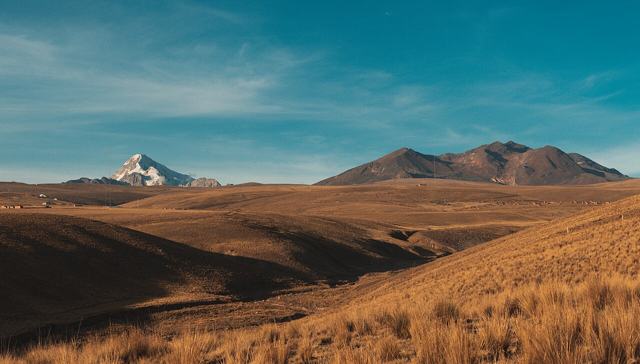
| Trip | Distance from the centre | What it is |
|---|---|---|
| Valle de la Luna (Mallasa) | 7.5 miles by road, about 15 min | Clay pinnacles and craters just outside the city. Entry Bs 20; bus Bs 2.30 or taxi Bs 35. |
| Valle de las Ánimas | 11 miles by road, 22 min | Rock spires with views of Illimani; good walking and climbing. |
| Chacaltaya | About 16 miles by road, 36 min; mountain at 18,000 ft | Abandoned ski area (the glacier melted) with views of Huayna Potosí. Very high; weather and snow on the road are the main hazards. |
| Tiwanaku | About 43 miles; roughly a 90-minute drive | Pre-Inca ceremonial site and UNESCO World Heritage Site: the Akapana pyramid, the Gate of the Sun and two museums. |
| Lake Titicaca: Huatajata | About 50 miles by road, 79 min | Lakeside village on the La Paz side; the easy choice if you just want to see the lake. |
| Lake Titicaca: Copacabana and Isla del Sol | About 91 miles by road; bus about 3.5 hours, Bs 20 to 25, with a short ferry at the Tiquina Strait | Lakeside town and gateway to Isla del Sol (boats from Copacabana). Better as an overnight trip than a day trip. Lake boats are often basic, so check for life jackets. |
| Yungas Road ('Death Road') by mountain bike | About 40 miles downhill from La Cumbre to Yolosa; 3 to 6 hours of riding | The old main road to the Yungas, now mostly bike tours. |
| Coroico | About 65 miles by road; minibus about 2.5 hours, Bs 20 | Small Yungas town where the road drops from cold highlands into wet tropics; hiking nearby. Private taxi from La Paz Bs 300 to 350. |
Road times assume no traffic. Prices may be out of date. Bolivia has no official safety standards for tour operators, so on the Yungas Road check the bikes, the guide's safety kit and your insurance.
Sources (12)
- Wikivoyage, La Paz (community travel guide; listings have mixed edit dates) 2026-11-13
- OpenStreetMap Nominatim geocoding (coordinates used for straight-line distances). © OpenStreetMap contributors, ODbL 2026-11-13
- Cadena 3 (EFE), teleférico supera los 640 millones de usuarios: fare Bs 3 2025-09-02
- UK FCDO Bolivia travel advice, Safety and security (page updated 2026-09-22; still current 2026-11-12) 2026-09-22
- OSRM routing on OpenStreetMap data (project-osrm.org demo server): driving distance and free-flow time, no traffic 2026-11-13
- Wikivoyage, Chacaltaya 2026-11-13
- Wikivoyage, Tiwanaku 2026-11-13
- Wikivoyage, Bolivia (Talk section) 2026-11-13
- Wikivoyage, Copacabana (Bolivia): Get in from La Paz 2026-11-13
- Wikivoyage, Isla del Sol 2026-11-13
- Wikivoyage, Yungas Road 2026-11-13
- Wikivoyage, Coroico: Get in / Go next 2026-11-13
Food and markets
Includes residents' reports
Lunch is the main meal. A set almuerzo of soup and a main costs Bs 15 to 25; market meals often cost under Bs 10.
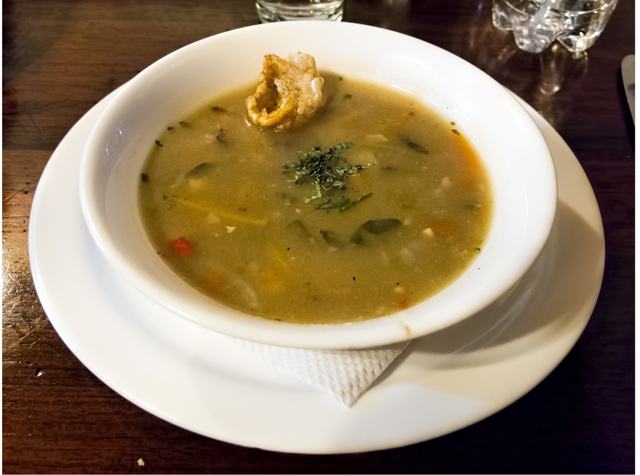
Dishes to try
The four below, plus Pique macho, another La Paz favorite.
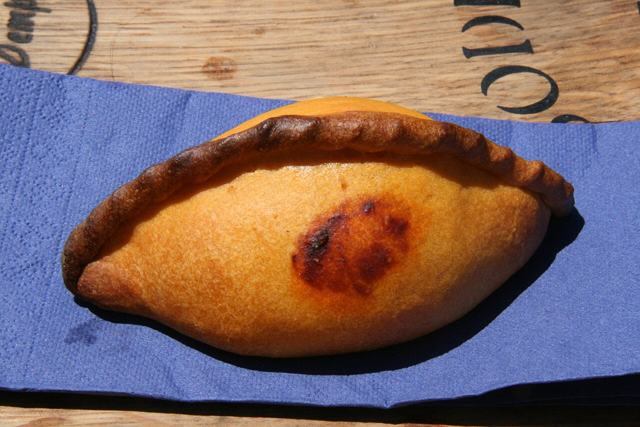
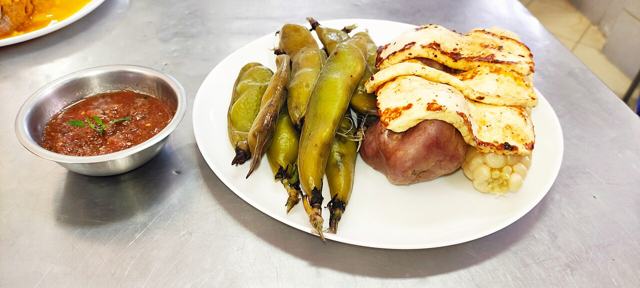

Markets
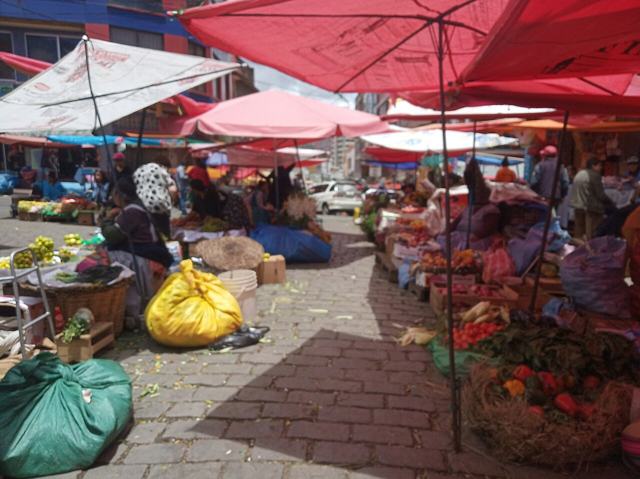
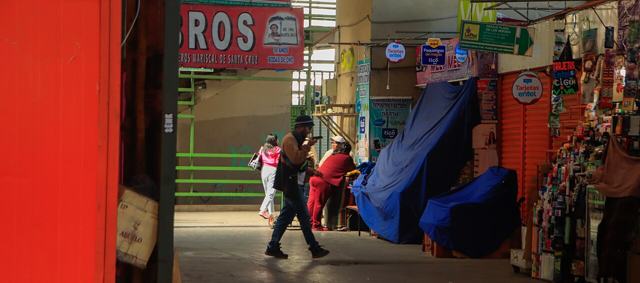
The three below, plus Mercado Modelo de Achumani, a neighbourhood market in Zona Sur.
Sources (4)
- Rough Guides, Eating and drinking in Bolivia (page copyright 2026, undated article) 2026-11-13
- Wikivoyage, La Paz (community travel guide; mixed edit dates) 2026-11-13
- Bolivian Express, Humans of Mercado Rodriguez 2015-10-05
- OpenStreetMap named POIs via Overpass API (data timestamp 2026-07-24). © OpenStreetMap contributors, ODbL 2026-11-13
Healthcare
Includes residents' reports
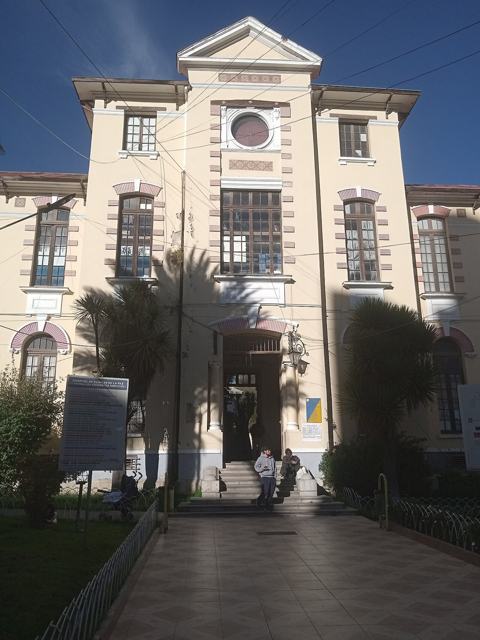
Private clinics take international insurance. Residents say routine care is adequate, with some good doctors, but advise having complex procedures elsewhere. Medical evacuation can be slow.
| Clinic | Area |
|---|---|
| Clínica del Sur | Obrajes |
| Clínica Los Andes | Los Pinos |
| Clínica Alemana | Sopocachi |
| CEMES (English-speaking staff) | Sopocachi |
| Clínica Virgen de la Asunción | Sopocachi |
| Hospital Arco Iris (public and private) | Villa Fátima |
Call ahead to check which insurance they accept. Bring enough of your prescription medicines: some are in short supply.
Sources (6)
- UK Government, List of medical facilities and practitioners in Bolivia (published 2020-06-23) 2020-06-23
- UK FCDO Bolivia travel advice, Health (altitude sickness; medicine shortages; updated 2026-09-22) 2026-09-22
- Tales Magazine Real Post Report, La Paz (US diplomat with family) 2024-01-10
- Tales Magazine Real Post Report, La Paz (diplomatic mission employee) 2022-08-14
- Tales Magazine Real Post Report, La Paz (embassy employee, 3 years) 2019-12-17
- OpenStreetMap named POIs via Overpass API (data timestamp 2026-07-24). © OpenStreetMap contributors, ODbL 2026-11-13
Families and schools
Includes residents' reports
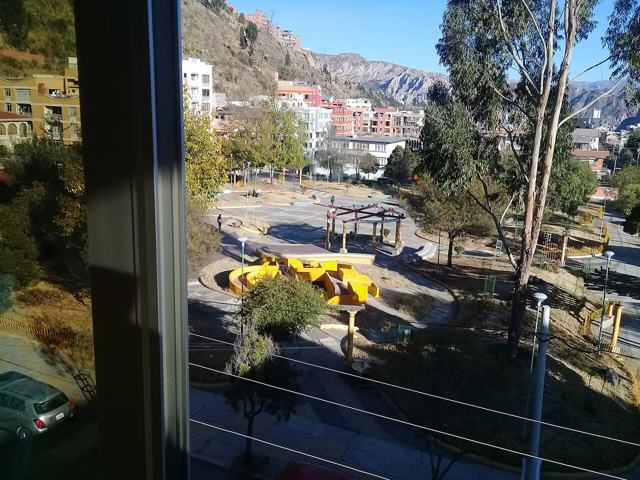
Most expat families live in Zona Sur, near the international schools. Residents say the altitude affects some children.
| School | Area | Curriculum |
|---|---|---|
| ACS Calvert (American Cooperative School) | Calacoto | American, in English (founded 1955) |
| Lycée Franco-Bolivien | Achumani | French national curriculum (AEFE network), in French, Spanish and English |
| Colegio Alemán Mariscal Braun | Zona Sur | German school |
| Saint Andrew's School | Zona Sur | Ask the school |
| Highlands International School | Near Mallasa | Ask the school |
Residents' view: most expat families use ACS Calvert, and a few the French or German schools. Parents praise its facilities and class sizes; one 2024 report felt quality had slipped since COVID.
Fees: ask each school. The only published estimate, about $1,330 a year for primary, rests on very few reports.
Sources (8)
- ACS Calvert (American Cooperative School) website 2026-11-13
- OpenStreetMap via Overpass API (data timestamp 2026-07-28). © OpenStreetMap contributors, ODbL 2026-11-13
- Wikipédia (fr), Lycée franco-bolivien Alcide-d'Orbigny (AEFE network, établissement conventionné) 2026-11-13
- Tales Magazine Real Post Report, La Paz (embassy employee, 3 years) 2019-12-17
- Tales Magazine Real Post Report, La Paz (US diplomat with family) 2024-01-10
- Cyril Jarnias blog, international schools in Bolivia (lead only; not publishable on its own) undated (seen via search result)
- Tales Magazine Real Post Report, La Paz (diplomatic mission employee) 2022-08-14
- Numbeo, Cost of Living in La Paz (crowd-sourced; page says 282 entries by 17 contributors in the past 12 months; last update 11 Nov 2026) 2026-11-11
Nightlife
Includes residents' reports
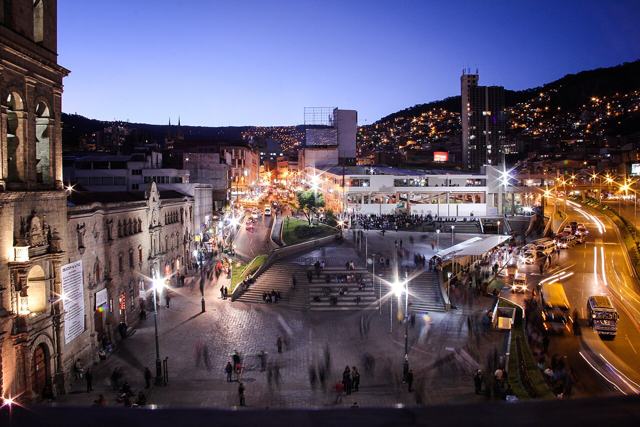
- Sopocachi: The densest cluster of mapped bars and clubs: Av. Sánchez Lima, Av. 20 de Octubre and Pasaje Medinacelli.
- Centro tourist strip (Sagárnaga, Linares, Calle Murillo): Backpacker pubs and peñas (folk-music venues) close to the Witches' Market.
- Zona Sur (San Miguel and Calacoto): Mapped pubs and clubs along Av. Montenegro, Calle Jaime Mendoza and Calle 8 de Calacoto in San Miguel and Calacoto.
Long-standing venues include Mongo's, Malegria and Forum in Sopocachi, and Sol y Luna in the centre. Check a venue is still open before you go. Bars stop serving at 4 am; at night, book a radio or phone taxi.
Sources (3)
- OpenStreetMap via Overpass API (data timestamp 2026-07-28). © OpenStreetMap contributors, ODbL 2026-11-13
- Wikivoyage, La Paz (community travel guide; listings have mixed edit dates) 2026-11-13
- UK FCDO Bolivia travel advice, Safety and security (page updated 2026-09-22; still current 2026-11-12) 2026-09-22
Getting there and getting around
Includes residents' reports
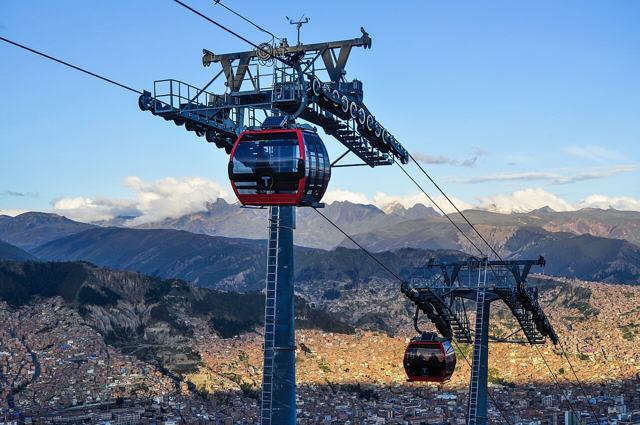
El Alto International Airport (LPB) sits on the plateau above the city, at about 13,300 ft. There are no direct US flights: most trips connect through Lima, Bogotá or Santa Cruz. BoA flies to Miami from Santa Cruz, not La Paz.
From the airport
- To Sopocachi: about 7.5 miles, 15 minutes. Radio taxi, shared taxi or airport minibus.
- To Calacoto (Zona Sur): about 13 miles, 23 minutes, by taxi.
- There's no cable-car station at the airport; the nearest is about 1.4 miles away.
- Roadblocks can close the airport road at short notice.
Around the city
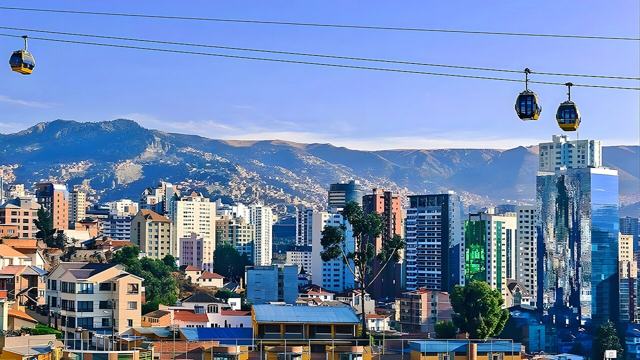
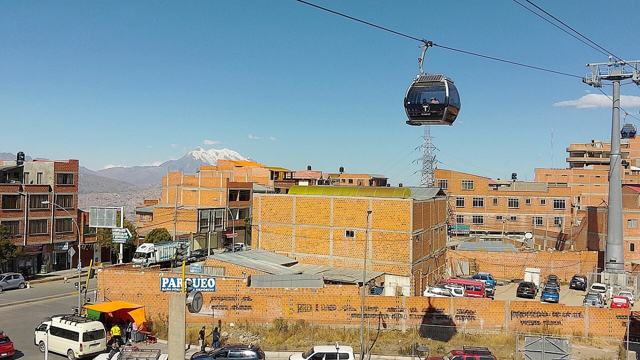
- Mi Teleférico, the cable-car network, has 10 lines and a Bs 3 fare. The Amarilla (Sopocachi), Verde (Zona Sur) and Celeste (Prado) lines meet at Libertador. It kept running during the mid-2026 blockades.
- Minibuses and trufis (shared taxis on fixed routes) cover the city; the route is on the windshield.
- Taxis have no meters: agree the fare first, and book by phone or radio.
- Ride-hailing apps: Didi is said to be the main one. Check when you arrive.
- The centre and Sopocachi are walkable but steep. If you're lost, walk downhill to reach the Prado.
- If you drive, residents recommend a high-clearance or 4×4 car. Importing a car is restricted.
Sources (15)
- Wikipedia, El Alto International Airport: Airlines and destinations (last revision 2026-09-08; secondary reference) 2026-09-08
- OpenStreetMap Nominatim geocoding (coordinates used for straight-line distances). © OpenStreetMap contributors, ODbL 2026-11-13
- Wikipedia, Viru Viru International Airport: Airlines and destinations (last revision 2026-10-04; secondary reference) 2026-10-04
- American Airlines route page, La Paz to Miami (shows flights as coming soon / no fares) 2026-11-13 (seen via search result summary only)
- OSRM routing on OpenStreetMap data (project-osrm.org demo server): driving distance and free-flow time, no traffic 2026-11-13
- Wikivoyage, La Paz (community travel guide; listings have mixed edit dates) 2026-11-13
- OpenStreetMap via Overpass API (data timestamp 2026-07-28). © OpenStreetMap contributors, ODbL 2026-11-13
- UK FCDO Bolivia travel advice, Safety and security (page updated 2026-09-22; still current 2026-11-12) 2026-09-22
- Cadena 3 (EFE), teleférico supera los 640 millones de usuarios: fare Bs 3; preferential Bs 1.50 and Bs 1; 10 lines, 33 km 2025-09-02
- Prensa Latina, Teleférico de Bolivia recibirá al pasajero 700 millones: 10 lines, 26 stations 2026-04-14
- OpenStreetMap aerialway relations and stations via Overpass API. © OpenStreetMap contributors, ODbL 2026-11-13
- Wikipedia, Mi Teleférico (line list, opening dates; planned Línea Dorada) 2026-11-13
- La Razón, Mi Teleférico transportó a casi 16 millones de pasajeros durante los bloqueos en La Paz (headline only; article paywalled) 2026-07-03
- Tales Magazine Real Post Report, La Paz (US diplomat with family) 2024-01-10
- Tales Magazine Real Post Report, La Paz (diplomatic mission employee) 2022-08-14
Expat community and coworking
Includes residents' reports
The foreign community is small. Social life runs through schools, embassy events and clubs; one resident found it better for families than for singles.
Groups
- German Club (Club Alemán): social and sports club popular with residents.
- La Paz Tennis Club: about $500 a month.
- Parlana: a Tuesday language exchange and salsa night; check it still runs.
Coworking
- Squemas Cowork, Calle Macario Pinilla 2588, Sopocachi.
- Tonantzin, Calle Montevideo 307, on the San Pedro and Sopocachi edge.
- Conecta, Calle Fernando Guachalla 342, Sopocachi: private offices listed from Bs 1,520 a person a month.
Call ahead for opening hours and prices.
Sources (5)
- Tales Magazine Real Post Report, La Paz (embassy employee, 3 years) 2019-12-17
- Tales Magazine Real Post Report, La Paz (diplomatic mission employee) 2022-08-14
- Tales Magazine Real Post Report, La Paz (US diplomat with family) 2024-01-10
- OpenStreetMap named POIs via Overpass API (data timestamp 2026-07-24). © OpenStreetMap contributors, ODbL 2026-11-13
- OpenStreetMap Nominatim lookups (airport, schools, markets, coworking addresses). © OpenStreetMap contributors, ODbL 2026-11-13
Learning Spanish
Includes residents' reports
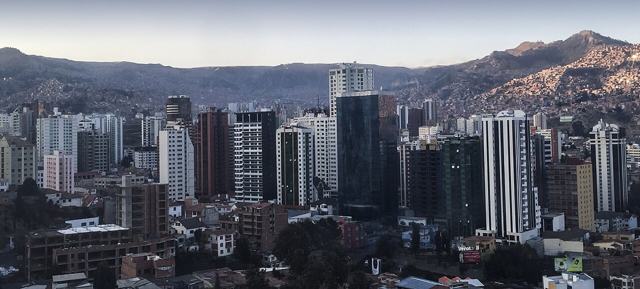
Bolivians tend to speak slowly and clearly, and many learners find the accent easier than Argentine or Chilean Spanish.
What lessons cost
- Private lessons in La Paz: about $5.50 to $8.50 an hour.
- Small-group intensive courses, 20 hours a week: about $100 to $200 a week.
- Bolivian Express Spanish Plus: $1,000 for 32 hours of classes and 12 hours of guided immersion; 2027 groups start in February, May, August and November.
Schools
- ABC Spanish Tuition, Miraflores.
- Instituto Exclusivo, Sopocachi.
- Pico Verde Languages, Calle Sagárnaga in the centre.
Ask each school for current prices.
Sources (8)
- One World 365, A Guide to Studying Spanish in Bolivia undated (read 2026-11-13)
- 123TeachMe directory, ABC Spanish (La Paz) listing undated listing (read 2026-11-13)
- 123TeachMe directory, Instituto Exclusivo (La Paz) listing undated listing (read 2026-11-13)
- Wikivoyage, La Paz (community travel guide; listings have mixed edit dates) 2026-11-13
- Bolivian Express, Bx Spanish Plus programme page 2026-11-13 (from city.json)
- Escuela Carmen Vega (Cochabamba, not La Paz), in-person Spanish course prices 2026-11-13 (page undated)
- Wikivoyage, Bolivia (Talk section) 2026-11-13
- OpenStreetMap named POIs via Overpass API (data timestamp 2026-07-24). © OpenStreetMap contributors, ODbL 2026-11-13
Neighbourhood areas are approximate. Map data © OpenStreetMap contributors.
Altitude and health
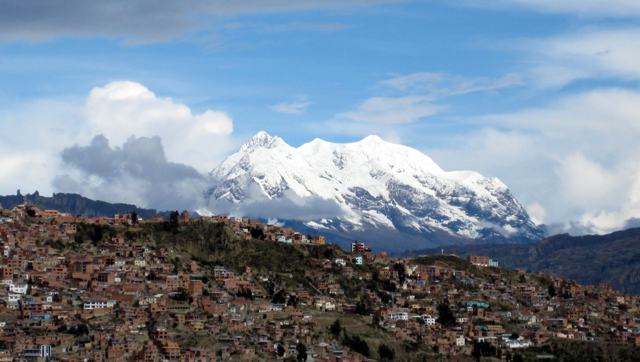
Lower means easier breathing: Zona Sur sits about 1,000 ft below the centre
La Paz sits in a canyon, so where you live changes how high you sleep. Zona Sur is about 1,000 ft lower than the centre.
If you have a heart or lung condition, see a doctor before you plan a move.
What health authorities advise
- Flying straight to La Paz puts you in the high-risk group for altitude sickness.
- Symptoms usually start 6 to 10 hours after arrival: headache, nausea, tiredness, dizziness and poor sleep. Rest; they usually ease in 1 to 3 days.
- Get help at once for confusion, poor balance, breathlessness at rest, or a cough with frothy or bloody spit.
- Plan the first two days for rest: no alcohol and only light exertion. Sleeping in Zona Sur is about 1,000 ft lower than the centre.
- A preventive prescription medicine is recommended for high-risk travelers. It interacts with some drugs, so ask your doctor.
See a doctor before you go if you have
- Heart disease, especially a recent heart attack or stroke, or heart failure
- Lung disease such as COPD, unstable asthma or pulmonary hypertension
- Sickle cell disease or trait, diabetes, or sleep apnoea
- A pregnancy, or altitude sickness in the past
Older age alone doesn't raise the risk. This is general guidance, not medical advice.
Sources (8)
- CDC Yellow Book 2026, High-Altitude Travel and Altitude Illness (Hackett and Shlim; page dated 2025-04-23) 2025-04-23
- UK FCDO Bolivia travel advice, Health 2026-09-22
- NHS, Altitude sickness (last reviewed 31 July 2023; next review was due 31 July 2026) 2023-07-31
- CDC Yellow Book 2026, Medication and Vaccine Interactions in Travel Medicine (acetazolamide interactions) 2026 edition (seen via search result)
- OpenTopoData SRTM 30 m elevations 2026-11-13
- SENAMHI Bolivia, SISMET database: La Paz (Laikakota Park) station, 3,650 m, 1981-2010 normals, as tabulated in Wikipedia 2019-09-22 (Wikipedia access date)
- Wikivoyage, La Paz (community travel guide; mixed edit dates) 2026-11-13
- Tales Magazine Real Post Report, La Paz (US diplomat with family) 2024-01-10
Cost of living
Includes residents' reports
A 1-bedroom in Zona Sur asks about $290 to $390 a month
Bolivia let its currency float in late June 2026, so dollar prices from before then overstate today's costs. Prices in bolivianos are rising: up 6.03% from January to October 2026.
| Item | Price |
|---|---|
| Set lunch (almuerzo) | Bs 15 to 25 (about $1.30 to $2.15) |
| Cable car ride | Bs 3 (about $0.26) |
| Taxi within downtown | Bs 6 to 8, agreed before you get in |
| Tennis Club membership | About $500 a month |
Many rental ads ask for one month's commission, one month's guarantee and one month in advance. Fuel, fresh food and some medicines have run short during blockades.
A month's budget
| Per month | One person, modest | One person, comfortable | Couple, modest | Couple, comfortable |
|---|---|---|---|---|
| Rent | $317 | $386 | $317 | $812 |
| Groceries | Not known yet | Not known yet | Not known yet | Not known yet |
| Utilities | $24 | $24 | $24 | $24 |
| Phone and home internet | $23 | $32 | $32 | $44 |
| Transport | $11 | $25 | $23 | $36 |
| Eating out | $17 | $31 | $34 | $62 |
| Health insurance | Not known yet | Not known yet | Not known yet | Not known yet |
| Other | Not known yet | Not known yet | Not known yet | Not known yet |
Scroll sideways to see every column.
Modest: a 1-bedroom in Calacoto, cable car and set lunches. Comfortable: more space, some taxis and more meals out.
No total yet: groceries, health insurance and personal spending are still missing. As a rough check, one person's costs excluding rent come to about $308 a month.
Sources (12)
- Banco Central de Bolivia, Tabla de cotizaciones No. 213-26: TCO 11.67 Bs per USD 2026-11-13
- Banco Central de Bolivia, Resolución de Directorio N° 88/2026 (26 June 2026), new exchange-rate scheme 2026-06-26
- Correo del Sur, El dólar se mantiene en Bs 11,52 ... bajo el nuevo esquema del BCB 2026-08-19
- eju.tv, Inflación llega al 6,03% ... (INE figures: October 2026 +2.07% month on month; +6.03% January-October) 2026-11-06
- InfoCasas Bolivia rental listings (see neighbourhoods.json for per-area samples) 2026-11-13
- Rough Guides, Eating and drinking in Bolivia (page copyright 2026, undated article) 2026-11-13
- Cadena 3 (EFE), teleférico supera los 640 millones de usuarios: fare Bs 3; preferential Bs 1.50 and Bs 1; 10 lines, 33 km 2025-09-02
- Wikivoyage, La Paz (community travel guide; mixed edit dates) 2026-11-13
- Tales Magazine Real Post Report, La Paz (embassy employee, 3 years) 2019-12-17
- Tales Magazine Real Post Report, La Paz (US diplomat with family) 2024-01-10
- UK FCDO Bolivia travel advice, Safety and security (updated 2026-09-22) 2026-09-22
- UK FCDO Bolivia travel advice, Health (altitude sickness; medicine shortages; updated 2026-09-22) 2026-09-22
Climate
Mild days, cold nights, all year
Days 63–68 °F · Nights 37–45 °F, year-round; coldest in July.
Days are mild all year, around 63 to 68 °F, and nights are cold. The real choice is dry or wet months. Zona Sur, lower down, is milder.
| Season | What to expect |
|---|---|
| Wet (December to March) | Most of the year's rain, up to 4.9 inches in January with about 21 rainy days. Highs 65 to 68 °F, lows about 45 °F. |
| Autumn (April) | Rain tapering off; highs about 66 °F, lows about 43 °F. |
| Dry, cold nights (May to August) | Almost no rain and the sunniest months. Highs 63 to 66 °F, lows 37 to 41 °F; July is coldest. It occasionally snows a little. |
| Spring (September to November) | Warmest days (about 68 °F in November) and rain returning. Smoke from forest fires can make the air poor, worst around October. |
Sources (6)
- SENAMHI Bolivia, SISMET database: La Paz (Laikakota Park) station, 3,650 m, 1981-2010 normals, as tabulated in Wikipedia 2019-09-22 (Wikipedia access date)
- Deutscher Wetterdienst / Meteo Climat via Wikipedia: El Alto International Airport, 4,058 m, 1991-2020 normals 2026-11-13
- Wikipedia, La Paz (lead, infobox, climate tables; used as a relay for SENAMHI and census figures) 2026-11-13
- Wikivoyage, La Paz (community travel guide; mixed edit dates) 2026-11-13
- UK FCDO Bolivia travel advice, Safety and security (updated 2026-09-22) 2026-09-22
- Tales Magazine Real Post Report, La Paz (US diplomat with family) 2024-01-10
Safety
Includes residents' reports
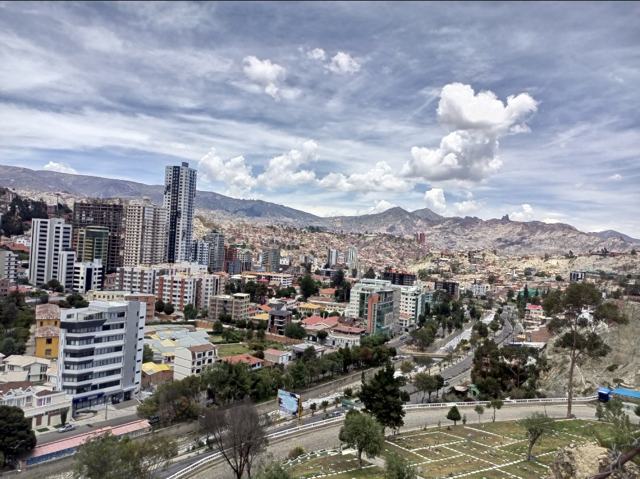
Bolivia is level 2 of 4 on the US travel advisory scale
Levels run from 1 (normal care) to 4 (do not travel).
- Petty crime is common in the centre and on buses.
- Robberies of taxi passengers have risen: use radio or phone-booked taxis.
- Express kidnappings have been reported around the Cementerio General and in Sopocachi.
- Watch for fake police officers.
- A state of emergency brought protests and roadblocks: avoid demonstrations and never try to cross a blockade.
Residents' view: a diplomat writing in 2024 called La Paz one of the safest Latin American capitals they knew. Zona Sur residents feel safe in their areas but warn about car break-ins. There are no official crime figures by neighbourhood.
Sources (6)
- US State Department travel advisories list: Bolivia Level 2 (crime, unrest), entry dated 2026-08-18; seen via search, page blocked our script 2026-08-18
- UK FCDO Bolivia travel advice, Safety and security (updated 2026-09-22) 2026-09-22
- UK FCDO Bolivia travel advice, Warnings and insurance (State of Emergency; updated 2026-09-22) 2026-09-22
- Tales Magazine Real Post Report, La Paz (US diplomat with family) 2024-01-10
- Tales Magazine Real Post Report, La Paz (embassy employee, 3 years) 2019-12-17
- Bolivian Express #97, editorial "Neighbourhoods" 2019-08-28
Internet and remote work
Includes residents' reports
Fibre plans run from 50 to 1,000 Mbps
Each mark is a home fiber plan. The shaded band, 25 to 100 Mbps, is enough for video calls.
Home fiber is widely sold and cheap. Typical home speeds are about 77 Mbps, up from 62 a year earlier; mobile is about 23 Mbps.
Typical prices: 120 Mbps fiber from about $14.50 a month; 1,000 Mbps about $39 (Entel). Viva and COTEL cost more for similar speeds.
Residents say home internet handles video calls and streaming; installation takes about two weeks.
Working US hours
- From November to March, La Paz is 1 hour ahead of New York; from March to November it's the same time.
- Protests and roadblocks can disrupt travel and supplies at short notice.
Sources (13)
- Entel, Internet Fibra (Simple S/M/L/XL plans and one-off charges) 2026-11-13 (page undated; read on this date)
- Viva, Internet Fibra Óptica plans 2026-11-13 (page undated; read on this date)
- COTEL, Tarifario (internet-only and bundle tariffs) 2026-11-13 (page undated; read on this date)
- Entel, Móvil Prepago packages 2026-11-13 (page undated; read on this date)
- Entel, Móvil Postpago plans 2026-11-13 (page undated; read on this date)
- Viva home page (postpaid mobile plans) 2026-11-13 (page undated; read on this date)
- Ookla Speedtest Global Index, Bolivia (rolling-quarter figures, September 2026 edition) 2026-09 (read 2026-11-13)
- Tales Magazine Real Post Report, La Paz (embassy employee, 3 years) 2019-12-17
- Tales Magazine Real Post Report, La Paz (diplomatic mission employee) 2022-08-14
- Tales Magazine Real Post Report, La Paz (US diplomat with family) 2024-01-10
- timeanddate.com, Time zone in La Paz, Bolivia (BOT, UTC-4, no clock changes in 2026) 2026-11-13
- UK FCDO Bolivia travel advice, Safety and security (page updated 2026-09-22; still current 2026-11-12) 2026-09-22
- Wikivoyage, La Paz (community travel guide; listings have mixed edit dates) 2026-11-13
Living in Bolivia long-term
Staying beyond a visit means residency. Our Bolivia guides cover the routes, the documents and what you'd pay in tax.
Questions people ask
How high is La Paz, and does it matter where I live?
Zona Sur is about 1,000 ft lower than the centre, so it's the gentler choice. Ask your doctor first if you have a heart or lung condition.
Is La Paz safe?
The US rates Bolivia Level 2 of 4. Watch for petty crime in the centre, book your taxis, and avoid protests and roadblocks. Zona Sur residents say they feel safe in their areas.
What does a flat cost?
About $290 to $390 a month for a 1-bedroom in Calacoto or San Miguel. Expect to pay a month's commission, a month's deposit and a month in advance up front.
Which neighbourhood should I choose?
Sopocachi if you want cafés, nightlife and walking; Zona Sur (Calacoto, San Miguel, Achumani) if you want lower altitude, more space and international schools. Use the map above to compare.
Can I live in Bolivia long-term?
Yes: temporary residency for 1 to 3 years, then permanent. See our Bolivia residency guide.
Can I fly direct to La Paz from the US?
No. Most trips connect through Lima, Bogotá or Santa Cruz; BoA flies to Miami from Santa Cruz, not La Paz.
Is the internet good enough for remote work?
Generally yes: fiber from about $14.50 a month handles video calls. Protests and roadblocks are the bigger risk.
Free shortlist
Your top 3 countries, picked for you
Tell us who's moving and we'll show the three Latin American countries that fit people like you best, ranked on what matters most to you, with the trade-off to know about each.